
 25 min read 19th Dec 2025
We’ve all had moments where our message didn’t quite land. An idea that sounded clear in our head but fell flat in conversation.
Often, it’s not what we say that holds us back, but how we say it. That’s where understanding the types of communication really makes a difference.
At Body Talk, we’ve spent over two decades refining The Body Talk Way, a science-backed framework that helps professionals at every level communicate effectively. This guide will show you how to take control of the way you connect, breaking down the five key types of communication and giving you practical ways to use each one more effectively.
Key Takeaways
Communication isn’t one skill. It’s a combination of signals working together to shape how your message is understood and acted on.
Here’s what to remember:
- Communication is about impact, not intention. What matters most isn’t what you meant to say, but how your message is received. Awareness is the first step to closing that gap.
- There are five core types of communication. Verbal, non-verbal, written, visual, and listening all play a role in every interaction. The strongest communicators know when to lean into each one.
- Your delivery carries as much weight as your words. Tone, posture, eye contact, and pacing can reinforce your message or quietly undermine it.
- Listening is a communication skill, not a courtesy. Active listening builds trust, prevents misunderstanding, and turns conversations into collaboration.
- Written and visual communication shape credibility. Clear writing and focused visuals help your message land with precision, especially in professional settings.
- Consistency creates confidence. When what you say, show, write, and signal all align, people believe you, trust you, and follow your lead.
Understanding the types of communication gives you choice. Using them intentionally gives you influence.
Defining communication
Communication isn’t just about talking, it’s about landing your message. It’s the exchange of ideas, emotions, and intent in a way that builds understanding and creates action.
Every time you speak, write, or even pause, you’re sending a signal that shapes how others see you, trust you, and respond to you. To explore this in more depth, our guide on what communication really is breaks down how meaning is created beneath the surface of every interaction.
Why understanding the types of communication matters
Once you understand the types of communication, you can start using each one with intention. It’s the difference between being heard and truly understood.
In everyday interactions, it helps you adapt – knowing when to speak up, when to listen, and when to let your body language do the talking.
The five key types of communication
Each interaction you have, whether it’s a conversation, an email, or a presentation, draws on one or more of these five key types of communication.
1. Verbal communication
When we think of communication, this is usually where we start: the words we say and how we say them.
What is verbal communication?
Verbal communication is the exchange of information through spoken words- face-to-face, over the phone, or through virtual platforms. It’s the most direct way to share thoughts, ideas, and intentions.
But it’s also about how those words are delivered. Tone, pace, pitch, and emphasis all shape how your message lands and how people feel when they hear it.
What are the benefits of verbal communication?
- Builds connection and rapport – Conversations are immediate. You can read reactions and adjust your tone in real time.
- Enables quick feedback – Unlike written communication, you can immediately clarify or expand on your message when speaking directly.
- Helps express emotions clearly – Your tone and choice of words can convey empathy, enthusiasm, or confidence, helping others connect with the human side of your message.
How to improve verbal communication skills
Strong verbal communication starts with awareness – of both yourself and your audience. It’s about being intentional with your words, your tone, and your timing so your message has the right impact.
- Prioritise clarity – Keep your message focused on one key idea at a time and avoid overloading your listener with too much detail.
- Show empathy – Acknowledge the other person’s perspective before making your point. People engage more when they feel understood, not corrected.
- Pause with purpose – Silence can be powerful. It gives others time to process your words and shows confidence in what you’ve said.

2. Non-verbal communication
Non-verbal communication is the silent language that accompanies your words, shaping how your message is understood long before you finish speaking.
What is non-verbal communication?
Non-verbal communication is the exchange of information without words. It includes body language, gestures, facial expressions, eye contact, and posture – all the signals that reveal how we feel and what we mean, often more accurately than our words do.
What are the benefits of non-verbal communication?
Non-verbal communication reinforces and amplifies what you say. When your gestures, tone, and expressions support your words, your message becomes clearer, more consistent, and far more convincing.
Perhaps most importantly, non-verbal communication allows you to express intent without words. A simple smile, nod, or pause can communicate respect, empathy, or agreement in a way that feels genuine and authentic.
How to improve non-verbal communication
Small adjustments in your non-verbal communication can completely shift how you’re perceived and how confidently your message lands.
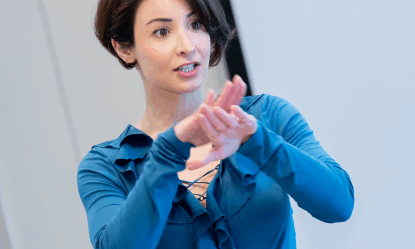
- Use gestures with purpose – Let your hands support your message. Open gestures make you appear inclusive and credible, while overactive movements can distract from what you’re saying.
- Practise congruence – Align your expressions, tone, and posture so they match your words. People believe what they see more than what they hear, so make sure your message and delivery tell the same story.
- Watch yourself on camera – Record a short pitch or presentation and observe. Are you fidgeting? Avoiding eye contact? Speaking too quickly? Self-awareness is the fastest way to improve presence.

3. Written communication
From emails and reports to presentation slides and proposals, the way you write shapes how others perceive you.
What is written communication?
Written communication is the exchange of information through the written word. It’s the most structured form of communication, allowing you to plan, refine, and present your ideas with precision.
What are the benefits of written communication?
One of the greatest advantages of written communication is that it allows careful thought and precision. You have time to plan, edit, and refine before your message reaches others, something you don’t always get in spoken exchanges.
Common challenges in written communication
Despite its strengths, written communication can easily miss the mark. Tone is one of the biggest pitfalls, as without body language or vocal cues, it’s easy for your words to be misread as too direct, too formal, or even cold.
In presentations, the issue is often distraction. Slides overloaded with text, data, or inconsistent visuals can pull focus away from your spoken delivery. Instead of listening, your audience ends up reading – and your message loses impact.
How to improve written communication
Improving your written messages is about writing so people understand and feel your message.
- Proofread carefully – Small errors can undermine professionalism. Read your work aloud, because if it sounds clunky, it probably reads that way too.
- Design slides for clarity – Keep text minimal and use visuals to highlight key ideas, not to repeat what you’re saying aloud.

4. Visual communication
In an age of information overload, how you show your message is just as important as how you say it.
What is visual communication?
Visual communication is the process of conveying information through visuals such as charts, infographics, videos, images, icons, and design layouts.
What are the benefits of visual communication?
Visuals can support your words by simplifying complex information. A well-designed chart or infographic allows your audience to grasp patterns, comparisons, or key data points instantly. Visual communication also engages audiences effectively. Humans process images far faster than text, so visuals draw people in and keep them focused.
How to use visuals effectively
Visual communication is powerful when it’s intentional. The goal isn’t to fill space, but to focus attention.
- Ensure accessibility – When presenting, check that your images are big enough and use clear layouts. Make sure everyone in the room or on screen can follow your content.
- Using visuals to amplify your message – Like the example below, where the image of the athletes injects energy and momentum into the room, reinforcing the drive and focus behind your words.

5. Listening
Listening is the most underestimated communication skill – and one of the most transformative.
What is listening in communication?
Listening is the bridge between understanding and action. Practicing active listening means being fully present – paying attention to words, tone, and emotion, then responding thoughtfully. Passive listening is the opposite: hearing the words but missing the meaning.
Why listening is a core type of communication
When you listen well, everything else in communication gets easier. It builds stronger relationships because people feel valued and understood. It prevents misunderstandings before they derail progress. And it builds trust, because real listening shows respect – not just for someone’s words, but for their perspective.
Common barriers to effective listening
The biggest barrier to listening isn’t always noise, it’s distraction. It’s checking your phone mid-conversation, planning your reply before the other person’s finished, or assuming you already know what they’re going to say. Add in emotional filters like stress or defensiveness, and it’s easy to miss the real message altogether.
How to improve listening skills
Listening is an active skill, and like any skill, it improves with focus and feedback.
- Be fully present – Put distractions out of reach, face the person, and give them your full attention. Presence is the clearest form of respect.
- Reflect and paraphrase – Summarise what you’ve heard in your own words. It confirms understanding and shows you’re engaged.

The role of communication in everyday life
Every goal you set, every project you deliver, every relationship you build depends on how well you communicate. From daily check-ins to major presentations, communication shapes performance at every level. In fact, communication has been proven to be “strongly related” to productivity in an organisation.
Good communication skills also drive leadership and career development. 50 years of research shows that:
- How leaders communicate directly affects how they’re perceived and whether they’re selected for more senior roles.
- The way a leader speaks, listens, and shares messages influences how people feel about their work, shaping motivation, morale, and ethical behaviour.
Formal vs informal communication
Every interaction falls somewhere between formal and informal.
What is formal communication?
Formal communication is structured, professional, and often follows a clear chain of command. It’s used in reports, presentations, meetings, and official updates.
What is informal communication?
Informal communication, also known as personal communication, is more flexible. It’s the quick chat after a meeting, the message that clears up confusion, or the conversation that sparks an idea. It builds trust, keeps teams connected, and helps ideas flow freely.
When to use each type effectively
Formal communication is important when accuracy, accountability, or structure matters – for example, in reports, presentations, or client updates. But professional communication doesn’t mean sounding stiff or distant. You can still bring warmth, clarity, and personality into a formal setting.
The key is context. Use structure when it’s needed, but let your tone stay human. Professionalism and approachability aren’t opposites, together, they create communication that’s clear, credible, and authentic.
Online and digital communication
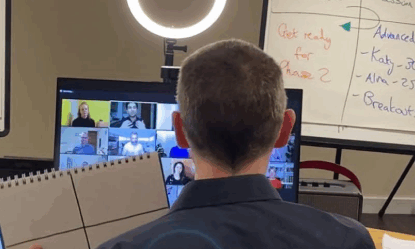
Video meetings and voice calls have made collaboration effortless, but they’ve also created new communication hurdles. Without in-person cues, it’s harder to read reactions or sense when someone’s disengaged. Eye contact feels different through a screen, and subtle signals like posture or micro-expressions can easily go unnoticed.
There’s also the issue of digital fatigue. Back-to-back video calls demand constant focus but offer little recovery time, leaving people drained and less able to listen actively.
Want to go deeper?
If you spend a large part of your week on video calls, this is worth a read. Discover what the latest research reveals about making online meetings more focused, engaging, and productive – and how small changes can have a big impact on results.
Read: How to Have Better Virtual Meetings
Using the types of communication together
Using the types of communication together isn’t about adding complexity. It’s about being consistent and intentional, so every element supports your message rather than competing with it. That’s how you create real understanding – in person, online, formal, or informal – and get people aligned behind your ideas.
In practical terms, that means:
- What you say (verbal) works with
- How you say it (non-verbal)
- What you write (written)
- What you show (visual)
- And how well you listen (active listening)
For example:
Imagine you’re presenting a project update remotely. Your verbal message says the project is on track, but your slouched posture, lack of eye contact, and cluttered slide full of text suggest uncertainty. The team leaves confused.
Now imagine the same update with upright posture, steady eye contact, concise slides, clear structure, and a moment to check for questions. The message becomes aligned, and people believe it.
Ready to transform the way your team communicates?
Partner with Body Talk to bring high-energy, practical communication training to your organisation – tailored to your business and your team’s real-world challenges.
Our sessions are built for impact, giving you science-backed insights and techniques you can start using straight away.
“The course you delivered was the best I have experienced in my career. Even sceptical people were quickly won around and delighted by the results. We are keen to now roll this out for the leaders in our business.”
Carol Campbell, Buying Director
Explore our Communication Training Courses
Frequently asked questions
Curious about how communication works in everyday life? These answers break down the most common questions we get about being a more effective communicator.
What are the 4 main types of communication?
Traditionally, communication is divided into four main types – verbal, nonverbal, written, and visual – though we tend to list listening as a fifth. Here’s a quick bullet list for you to refer to:
- Verbal or oral communication involves the spoken word, such as in face-to-face communication, presentations, or video meetings, where tone and pace help convey meaning.
- Nonverbal communication complements this through gestures, posture, and facial expressions, often saying more than words themselves.
- Written communication covers everything from written documents and reports to emails and messages.
- Finally, visual communication – charts, infographics, and design – helps simplify complex ideas and support understanding.
How can I improve my communication skills?
Improving communication skills starts with awareness – of yourself, your message, and your audience. Notice what’s holding you back right now: do nerves, habits, or assumptions get in the way? Then shift your focus outward. Ask yourself why your message matters to the people you’re speaking to.
Alongside this, you can build effective communication skills by:
- Practising clear and concise communication by focusing on one key idea at a time.
- Avoiding unnecessary detail and using plain language to ensure your message lands quickly and accurately.
- Being intentional with your non-verbal messages too – your body language, tone, and facial expressions all play a part in creating successful communication.
What role does body language play in communication?
Nonverbal cues such as posture, gestures, eye contact, and facial expressions all influence how others interpret your message and how much they trust you.
When your words and body language align, communication feels authentic and powerful. But when they conflict, for example, saying “I’m confident” while avoiding eye contact, the message breaks down. That’s what makes non verbal communication skills so essential to becoming a strong communicator.
What are communication channels?
Communication channels are the methods we use to share information, from face-to-face communication to online meetings or written messages on social media platforms.
The key is choosing the right channel for your goal and adapting your style to suit. For instance, choosing a face-to-face meeting for a difficult conversation and an online meeting for a quick update.
What are communication styles?
Your communication style reflects how you express yourself and interact with others. The main styles are assertive, passive, aggressive, and passive-aggressive, each influencing how your message is received.
An assertive communication style is often the most effective. It combines clarity with respect, allowing you to express your thoughts confidently without dismissing others. It’s the balance point between passive (holding back) and aggressive (pushing too hard).
What is intrapersonal communication?
Intrapersonal communication is your inner dialogue. It’s how you process thoughts, reflect on experiences, make decisions, and shape your self-perception.
Strong intrapersonal communication helps build self-awareness and emotional intelligence. When you understand your own thought patterns and reactions, you’re better equipped to manage stress, express yourself clearly, and communicate more effectively with others.











 Back
Back